Remembering Winstone Zulu
Zambian AIDS activist Winstone Zulu died on 12 October 2011. Zulu was for a time taken in by Thabo Mbeki's AIDS denialism -- and nearly died as a result -- but became a tireless campaigner against denialism and for people living with HIV/AIDS after antiretrovirals restored his health. Below is the Treatment Action Campaign's tribute to Zulu. Also see the Treatment Action Group's statement.
He was a brave AIDS activist who rebelled against Thabo Mbeki's AIDS denialism
14 October 2011
Winstone Zulu, the first Zambian to live openly with HIV and an outspoken proponent for the rights of people with HIV and TB, died on 12 October 2011. The Treatment Action Group (not to be confused with us, the Treatment Action Campaign) has written a moving tribute to Winstone: http://www.treatmentactiongroup.org/winstone-zulu [1]
We express our condolences to Winstone's family and friends.
Winstone was a leading figure in the Network of Zambian People Living with HIV/AIDS (NZP+) and one of the founders of the Pan African Treatment Access Movement.
We wish to pay tribute to Winstone by recalling his struggle with and against AIDS denialism. Winstone was open about his HIV status from the early 90s. In 1997 he started taking antiretroviral treatment.
South African study provides additional evidence that AIDS conspiracy theories are associated with risky sex
A study by two AIDSTruth contributors, Nicoli Nattrass and Eduard Grebe, has shown that belief in AIDS origin conspiracy theories like those promoted by AIDS denialists are associated with lower rates of condom usage among young adults. In addition, the study showed that young adults who trusted the denialist South African health minister (Manto Tshabalala-Msimang) more than her non-denialist successor were substantially more likely to believe conspiracy theories, while those who were not familiar with the denialiam-fighting activist group the Treatment Action Campaign were more likely to believe conspiracy theories and less likely to use a condom than those who were. This study adds to the evidence that state-supported denialism likely resulted (and continue to result) in unnecessary HIV infections in South Africa.
Readers without subscriptions can access a preprint of the article.
AIDS Behav. 2011 May 3. [Epub ahead of print]
AIDS Conspiracy Beliefs and Unsafe Sex in Cape Town
Grebe E, Nattrass N.
Abstract
A note from a childhood friend of Kim Bannon
by Phillip L. Murphy
This note first appeared on a Facebook page. It is republished here with the author's permission.
After speaking with Shannon, we decided it would be beneficial to those interested in Kim's history to hear my own personal story.
I was diagnosed with HIV in the fall of 1984. It was my final year of undergraduate work at KU, and i was deciding whether to attend medical school. after receiving the news in a very seedy sedgwick county health department office, I was terrified, horrified and in shock. I had been in a monogomous relationship with a man for almost a year. He began to hear rumors that a man he had dated previously was "sick". After his test results came back positive, it was my turn. Neither of us knew what to do or where to turn. In those days there was talk of quaranteening the infected in asylums or deserted islands. We were a pariahs, angels of death. From that moment on we couldn't plan for our futures or make decisions beyond what was for dinner because we expected to drop dead at any moment. That is what was happening to those in our situation. Read more »
Mortality by baseline CD4 cell count among HIV patients initiating antiretroviral therapy: evidence from a large cohort in Uganda
Mills EJ, Bakanda C, Birungi J, Mwesigwa R, Chan K, Ford N, Hogg RS, Cooper C.
aFaculty of Health Sciences, University of Ottawa, Ottawa, Canada bThe AIDS Support Organization (TASO), Headquarters, Kampala, Uganda cBritish Columbia Centre for Excellence in HIV/AIDS, Vancouver, Canada dMédecins Sans Frontiers (MSF), Geneva, Switzerland eDivision of Infectious Diseases, The Ottawa Hospital, Ottawa, Canada.
Abstract
OBJECTIVE: Evaluations of CD4 cell count and other prognostic factors on the survival of HIV patients in sub-Saharan are extremely limited. Funders have been reticent to recommend earlier initiation of treatment. We aimed to examine the effect of baseline CD4 cell count on mortality using data from HIV patients receiving combination antiretroviral therapy (cART) in Uganda.
DESIGN: Observational study of patients age ≥14 years) enrolled in 10 clinics across Uganda for which TASO has data.
METHODS: CD4 cell count was stratified into categories (<50, 50-99, 100-149, 150-199, 200-249, 250-299, ≥300 cells/mm) and Cox proportional hazards regression was used to model the associations between CD4 cell count and mortality. Read more »
HIV denialism has taken too many lives - Ken Witwer and Seth Kalichman
In the wake of HIV-positive boxer Terry Morrison's bid to fight in Quebec, the Montreal Gazette published a highly inaccurate and irresponsible piece by Terry Michael, a well-known AIDS denialist. It is clear that denialists are attempting to exploit Morrison's tragedy for propaganda purposes. While it is usually not a good idea to 'debate' denialists, it was important to counter the misinformation spread in a prominent newspaper. Two articles by scientists set the record straight and warned Gazette readers about the dangers of AIDS denialism:
- HIV denial is fatal – Norbert Gilmore (McGill University)
- HIV denialism has taken too many lives – Ken Witwer (Johns Hopkins University) and Seth Kalichman (University of Connecticut)
Witwer and Kalichman's piece is embedded below.
Read 'What we know about AIDS' from Nathan Geffen's 'Debunking Delusions' here
What we know about AIDS explains the essential science of HIV succinctly and clearly. It was originally published as a chapter in Debunking Delusions by Nathan Geffen. With the permission of the author, Nathan Geffen, and the book's publisher, Jacana, we are now releasing this chapter under the Creative Commons Share-Alike 3.0 Unported license. Please feel free to copy and distribute it. You are also allowed to modify it under the terms of the license. Debunking Delusions can be purchased online from amazon.com and kalahari.net.
New research provides further clues about long-term non-progressors
Denialists frequently cite the well-known phenomenon of some individuals with HIV living healthily for long periods without treatment as evidence that HIV does not cause AIDS. However, the existence of these rare individuals do not in fact disprove the science on HIV/AIDS. We debunked that myth here. Also, despite denialist claims to the contrary, research on how these individuals' immune systems control HIV for longer than usual has in fact been a priority and several studies have shed light on the mechanisms involved. A new study has now found slight differences in five amino acids in the HLA-B protein between long-term non-progressors and people who do not control HIV for longer than normal.
You can read a Reuters report on the study here.
Videos: Myths about HIV/AIDS debunked
These two videos from AIDSVideos.org do a good job debunking some of the myths about HIV tests and about HIV/AIDS.
What was Anthony Mbewu's role in the collapse of the Global Forum for Health Research?
Beverly Patterson Steams writes on SciDevNet:
Poor countries striving to improve their health systems deserve better than the unexplained implosion of the Global Forum for Health Research, argues Beverly Peterson Stearns.
Barely a year ago nearly 1,000 people from 80 countries gathered enthusiastically at the Palacio de Convenciones in Havana, Cuba, under the banner 'Innovating for the health of all'. More than half came from low- and middle-income countries. They were attending the annual meeting of the non-profit organisation the Global Forum for Health Research (GFHR), eager to hear about inventive and effective ways to conduct research, and urgently seeking to improve health in their countries.
Now, less than a year after taking office, the forum's executive director, Anthony Mbewu, has resigned, and the forum itself is in failing health. The prognosis is poor. Very few remain in its Geneva secretariat. Many employees have quit, been fired, or have retired early.
WBAI: Do not put Gary Null's dangerous show on the air (Sign on)
A large number of organisations and individuals have signed this letter to the WBAI management asking them to reverse a decision to restore supplement-entrepreneur Gary Null's show to WBAI radio. You can sign on by emailing [email protected].
To: Tony Bates, Interim Program Director
Berthold Reimers, Interim General Manager
Mitchel Cohen, Local Station Board Chair
Arlene Englehardt, Pacifica National Board and Executive DirectorTo whom it concerns:
We are writing as individuals and organizations who are deeply distressed by WBAI's recent restoration of supplement-entrepreneur Gary Null to the airwaves of WBAI Radio five days a week.
We are gravely concerned about this prospect and the consequences for people at risk of and living with HIV. Mr. Null and his frequent radio guests support the notions, among others, that HIV does not play a role in causing AIDS; that the disease is not transmitted sexually or via dirty needles; that HIV tests are meaningless; and that antiretroviral drugs are not only poisonous but can actually cause AIDS. Legitimate concerns and grievances about the pharmaceutical industry are eclipsed and diminished by this life-threatening stance.
The spread of false claims about HIV and AIDS is deadly, and particularly harms the poor communities of color most devastated by HIV/AIDS. Disinformation about HIV has caused the unnecessary suffering and death of an estimated 300,000 men, women and children (see http://www.guardian.co.uk/world/2008/nov/26/aids-south-africa ).
Both the existence of HIV and its role in the causation of AIDS has been amply demonstrated (see, e.g., www.aidstruth.org). Among the destructive effect of spreading these falsehoods is to reduce condom use, increase infection risk and dissuade people from the use of life-saving antiretroviral therapy (among other modalities).
We respect the station's longstanding free-speech tradition, and support open debate on critical public health issues. We also deeply appreciate the fiscal difficulties facing WBAI and the Pacifica network. However, the notion that WBAI's survival is dependent on relying on Mr. Null while spreading a message of death is antithetical to the mission of the station and of the Pacifica Network to which it belongs.
We call on WBAI management to immediately reverse its decision to add Mr. Null's program to its schedule.
Signed,
Kerry Cullinan: Frank Chikane’s whitewash of Mbeki is an ahistorical disgrace
This opinion piece by Kerry Cullinan appeared on the Health-e News Service:
OPINION: Doctors call them Thabo’s children – the thousands of kids infected with HIV by their mothers at birth who still fill hospital paediatric wards, suffering from a range of debilitating infections.
When many of them were born, they did not get antiretroviral medication that could have prevented their mothers from passing HIV on to them. This was because then-president Thabo Mbeki had decided that ARVs were “toxic” and somehow less desirable than a fatal, incurable virus.
But by 2000, at the height of Mbeki’s AIDS debating society, four independent studies had shown that two ARVs, AZT and nevirapine, could cut HIV transmission from mothers to babies by up to 50%.
Also by 2000, research showed a radical change in the death patterns of South Africans with a peak in young women and men, rather than the elderly, that could only be explained by AIDS.
It is well documented that some 330,000 people died under Mbeki’s watch because his government delayed the introduction of ARVs.
What is less known is that Mbeki’s refusal to accept that AIDS was caused by a viral infection caused his government to under-fund health services at the very time that hospitals were starting to see a surge in AIDS patients. They closed nurses’ training colleges and flat-lined health budgets to save money, hastening the collapse of health services that we see today.
Yet in a series of articles published in Independent newspapers countrywide recently, Mbeki’s loyal director general, Frank Chikane, has tried to portray his former boss as a deep thinker who took a principled stance after thorough research. Read more »
AIDS denialist defamatory comments results in donation to TAC
In October 2009, a politically right-wing British magazine, the Spectator, published a blog entitled "Questioning the AIDS consensus". The blog announced that the Spectator Events Division would be screening the AIDS denialist documentary, House of Numbers, to which the author of the blog appeared to be sympathetic. This was not the first time the Spectator had published or promoted nonsense about AIDS. In the early 2000s they published a piece by Rian Malan, replete with errors and misrepresentations, purporting to debunk AIDS statistics. Read more »
In Defence of Science: Seven points about traditional and scientific medicine
by Nathan Geffen, 28 August 2010
This is a corrected version of a position argued by the author at a debate that took place at the University of Cape Town in August 2010 about traditional and scientific medicine. Geffen is the treasurer of the Treatment Action Campaign, but this paper presents his personal views only. He is also author of the book Debunking Denialism (Jacana 2010)
Scientists can be elitist and patronising. In that way, they are no different to any other people with power, including some traditional healers and including people who defend science, like myself.
There are multiple knowledge systems. Cultural diversity, including African culture, is a valuable treasure. Traditional medicine is used by people across the world. African traditional medicine, in particular, is used by millions of people across Africa. It is therefore important to build relationships with traditional healers to ensure that their patients receive appropriate care. Many organisations, such as the Treatment Action Campaign (TAC), attempt to do this, with varying degrees of success.
However, In critiques of medicine and, on the other hand, efforts to accommodate traditional healing, humanities researchers sometimes stand accused of being relativist, i.e. promoting or implying multiple incompatible positions as being true or valid. They also sometimes stand accused of being less than forthright about the problems with traditional healing. With this in mind, I present seven frank points which I hope will inform this discussion. Read more »
The Cult of HIV Denialism
By Jeanne Bergman, Ph.D.
Achieve, Spring 2010. Reprinted with permission from Achieve.
Introduction
More is known about HIV than about any other virus. Less than three decades ago, doctors were perplexed by the appearance of Kaposi's sarcoma and Pneumocystis pneumonia (PCP) in young gay men. Since then, scientists and doctors, spurred by the activism of people with AIDS, discovered the virus now called HIV and proved that it causes AIDS by crippling the immune system until the body can no longer resist life-threatening infections.
Scientists around the world have isolated HIV, photographed it with electron microscopes, and sequenced the genomes of its different subtypes. There are now highly accurate tests for HIV antibodies and the virus itself, and increasingly effective and tolerable antiretroviral drugs (ARVs) for its treatment. Science is a gradual process, and there is still much that is not fully understood about HIV, but the evidence that HIV exists, is transmissible by blood, semen, and vaginal fluids -- and that it causes AIDS -- is vast and thorough. Read more »
Treatment Action Campaign on quack television adverts in South Africa
2 August 2010
ETV must stop airing dangerous Christ Embassy commercials
ETV is promoting quackery by airing Christ Embassy’s weekly info commercial at 7:30 on Sunday mornings. During the commercial the pastor who runs the church claims to faith-heal a number of diseases including cancer, heart disease and arthritis. Christ Embassy's website claims that Pastor Chris Oyakhilome, the proprietor of this church, can faith-heal HIV.
‘ETV's 3rd Degree has been outspoken against AIDS quackery and denialism and so it is disappointing that the station runs Christ Embassy adverts, which are quackery and a threat to public health,’ says Nathan Geffen, TAC Treasurer.
Many religious organisations are playing a critical role in the fight against HIV and TB in South Africa, raising awareness, providing spiritual and emotional support to people with these conditions and thereby helping them to adhere to the medications which cure TB and suppress HIV in the blood to restore people's health.
This is not the case with Christ Embassy. By claiming to heal life-threatening conditions, Christ Embassy is leading people to believe that they no longer have to adhere to treatment or seek appropriate medical care. Read more »
Conspiracy theories in science
We recommend this article, "Conspiracy theories in science" by Ted Goertzel in EMBO reports.
Conspiracy theories that target specific research can have serious consequences for public health and environmental policies
Conspiracy theories are easy to propa gate and difficult to refute. Fortu nately, until a decade or so ago, few serious conspiracy theories haunted the nat ural sciences. More recently, however, con spiracy theories have begun to gain ground and, in some cases, have struck a chord with a public already mistrustful of science and government. conspiracy theorists—some of them scientifically trained—have claimed that the HiV virus is not the cause of aiDS, that global warming is a manipulative hoax and that vaccines and genetically modified foods are unsafe. these claims have already caused serious consequences: misguided public health policies, resistance to energy conservation and alternative energy, and dropping vaccination rates.
Read the rest of the article (PDF).
Haiti study shows treating at CD4 of 350 versus 200 saves lives and reduces TB
New England Journal of Medicine 363(3) July 15, 2010
Early versus Standard Antiretroviral Therapy for HIV-Infected Adults in Haiti
Patrice Severe et al.
Background
For adults with human immunodeficiency virus (HIV) infection who have CD4+ T-cell counts that are greater than 200 and less than 350 per cubic millimeter and who live in areas with limited resources, the optimal time to initiate antiretroviral therapy remains uncertain.
Methods
We conducted a randomized, open-label trial of early initiation of antiretroviral therapy, as compared with the standard timing for initiation of therapy, among HIV-infected adults in Haiti who had a confirmed CD4+ T-cell count that was greater than 200 and less than 350 per cubic millimeter at baseline and no history of an acquired immunodeficiency syndrome (AIDS) illness. The primary study end point was survival. The early-treatment group began taking zidovudine, lamivudine, and efavirenz therapy within 2 weeks after enrollment. The standard-treatment group started the same regimen of antiretroviral therapy when their CD4+ T-cell count fell to 200 per cubic millimeter or less or when clinical AIDS developed. Participants in both groups underwent monthly follow-up assessments and received isoniazid and trimethoprim–sulfamethoxazole prophylaxis with nutritional support. Read more »
Berkeley Drops Probe of Duesberg After Finding 'Insufficient Evidence' - ScienceInsider
ScienceInsider reports:
The paper that cost the editor of Medical Hypotheses his job will have no further consequences for its main author, molecular virologist Peter Duesberg of the University of California (UC), Berkeley. The university has ended its misconduct investigation after concluding that Duesberg was within his rights when he wrote that there is no evidence of a deadly AIDS epidemic in South Africa.
Duesberg's paper, published online on 19 July 2009, triggered a storm of protests from AIDS scientists and activists. Elsevier, the publisher of Medical Hypotheses, has retracted the article and has terminated the contract of the journal's editor, Bruce Charlton of Newcastle University in the United Kingdom, who declined to introduce a peer review system at the 35-year-old journal.
MMR-scare doctor Andrew Wakefield struck from the register
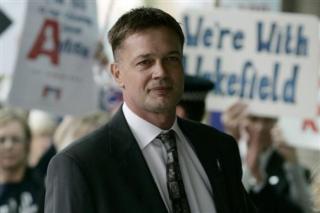 Andrew Wakefield
The doctor who sparked the "MMR scare" and a hero of the anti-vaccination movement, Andrew Wakefield, has been struck from the medical register in the United Kingdom by the General Medical Council after being found guilty of serious misconduct. The GMC found that he had "abused his position of trust" and "brought the medical profession into disrepute" through "multiple separate instances of serious professional misconduct". The Guardian reports:
Andrew Wakefield, the doctor at the centre of the MMR scare, has been struck off the medical register after being found guilty of serious professional misconduct.
He was not at the General Medical Council (GMC) hearing to receive the verdict on his role in a public health debacle which saw vaccination of young children against measles, mumps and rubella plummet.
The GMC said he acted in a way that was dishonest, misleading and irresponsible while carrying out research into a possible link between the measles, mumps and rubella (MMR) vaccine, bowel disease and autism.
AIDS Denialism, Medical Hypotheses, and The University of California’s Investigation of Peter Duesberg
AIDStruth.org, April 2010
AIDS denialist and U.C. Berkeley Professor Peter Duesberg has recently received media coverage following the withdrawal of a paper of his by the publisher, Elsevier, and an investigation into his conduct by the University. [1] Here, we provide some background and a timeline of events in the unfolding drama.
AIDS denialism, which Peter Duesberg has promoted tirelessly for the past quarter century, has claimed many victims from the ranks of HIV-positive people who believe in its tenets: that HIV is harmless or non-existent, antiretroviral drugs (ARVs) cause AIDS, and lifestyle choices and alternative therapies can prevent AIDS-related illness and death. [2] These deaths, caused by the fusion of ignorance and lies, are regrettable and tragic. They are dwarfed in scope, however, by what happened at the end of the millennium in South Africa. There, hundreds of thousands of people died when the apparatus of state was placed in service of Duesberg’s theories on HIV and AIDS. Read more »

